

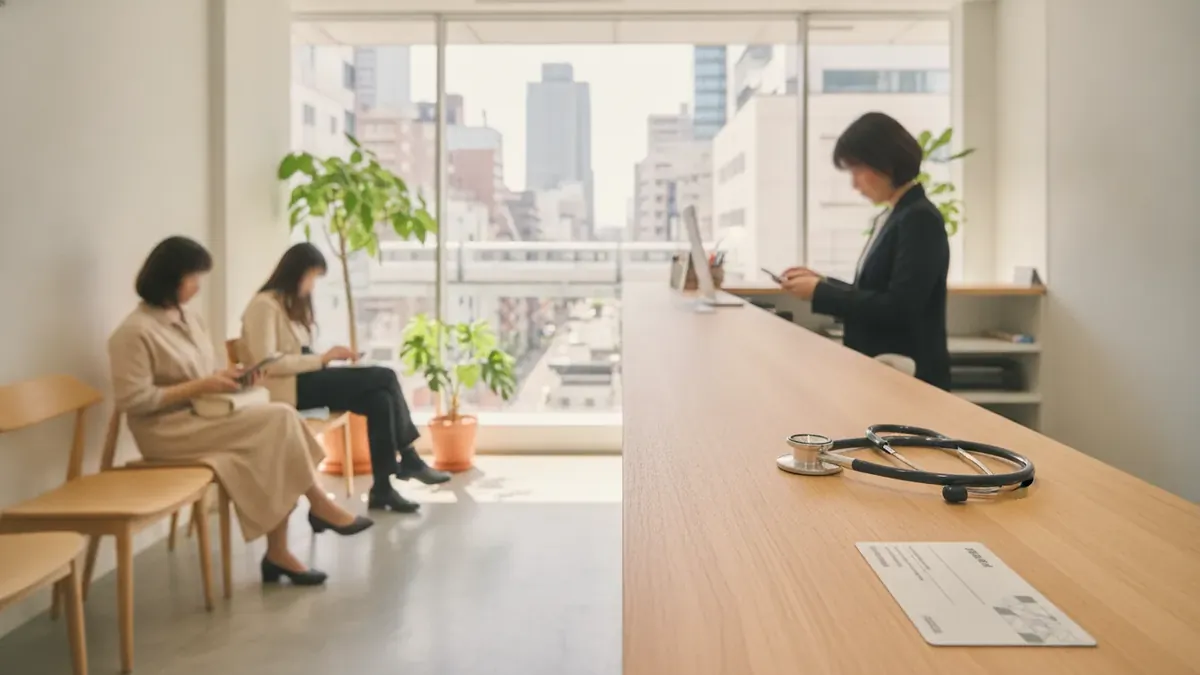
If you are planning healthcare in Japan, start with the Japan expat guide and your visa route — insurance and public access depend heavily on legal status and registration.
Costs below are indicative for 2026. Premiums vary by income, age, employer, and municipality; confirm with HR or your ward office.
At a glance
- Best for: expats who plan healthcare and registration before the first urgent appointment
- Hardest part: employer vs municipal insurance paths, language friction, and clinic navigation
- Good fit for: movers who compare city access and language support early
Public healthcare basics
Japan's healthcare system is high quality and generally affordable once you are properly enrolled. Most residents join either employees' health insurance through work or National Health Insurance (NHI) through their municipality.
Coverage is broad, but the experience is not always English-friendly. The practical question is not whether Japan has good healthcare. It is when you qualify, how you enroll, and whether your neighborhood clinics and hospitals suit your routine.
Short-stay visitors should not assume public coverage on arrival. Newly arrived residents usually need a transition plan until municipal or employer enrollment is complete.
Private healthcare and arrival insurance
Private clinics and international hospitals are widely used, especially by newcomers who want English-speaking staff or faster access while paperwork is still in progress.
Some statuses require proof of insurance before or shortly after arrival. Treat any visa or employer insurance requirement as separate from long-term NHI or workplace enrollment.
Insurance for visas vs insurance for daily life
Arrival insurance often covers the minimum needed for entry or early setup. Once living in Japan, you will usually move into the public system through employment or municipal registration, with patient co-pays typically around 30% for many services.
You may still want supplemental private cover for English-language GPs, dental care, mental health support, or faster specialist access depending on your needs.
Worked healthcare costs
Public insurance premiums
| Profile | Indicative monthly cost | Notes |
|---|---|---|
| New arrival on low/no prior Japan income | ¥2,000–8,000 | Municipality calculates from prior-year income |
| Employee on ¥4–6m salary | ¥18,000–35,000 employee share | Employer normally pays the other share |
| Self-employed / NHI on ¥4–6m income | ¥25,000–50,000+ | Municipality and household composition matter |
| Private arrival insurance | ¥5,000–15,000 | Bridge only; check exclusions |
These are planning bands, not quotes. NHI also includes an income-based component and, for ages 40–64, long-term-care contributions.
What residents pay at the clinic
Public insurance usually covers 70% of eligible treatment for working-age adults, leaving a 30% co-pay:
| Service | Typical insured patient cost |
|---|---|
| Routine clinic visit | ¥1,000–3,000 |
| First specialist visit / tests | ¥3,000–10,000 |
| Prescription medicines | ¥500–3,000 |
| Dental check / cleaning | ¥2,000–5,000 |
| Private English-first consultation | ¥8,000–20,000+ |
Japan's High-Cost Medical Expense Benefit limits eligible monthly out-of-pocket spending based on income. Ask your insurer or ward office before planned hospital treatment.
Three monthly budget models
| Profile | Public premium + routine co-pays | Public + English-first private backup | Heavy private use |
|---|---|---|---|
| Healthy solo | ¥15,000–35,000 | ¥30,000–60,000 | ¥80,000–150,000+ |
| Couple | ¥30,000–65,000 | ¥60,000–110,000 | ¥150,000–250,000+ |
| Family | ¥45,000–100,000 | ¥90,000–160,000 | ¥220,000–350,000+ |
Pair these with the Japan cost guide.
City and regional differences
Tokyo has the deepest mix of public hospitals, private clinics, and English-friendly providers, but volume and admin can still feel intense.
Osaka can offer strong access with a somewhat easier daily rhythm, but English support outside major providers is still limited.
Kyoto can work well for routine care, but specialist depth and English-first access are narrower than in Tokyo.
Healthcare should be part of your where to live decision, especially if you manage chronic conditions or expect family care needs.
Registering and using the system
Registration usually involves residence documentation, municipal enrollment, and receiving a health insurance card tied to your status. Employed movers are often enrolled through their employer. Others typically register for NHI at the local city or ward office after completing residence registration.
Paperwork is often Japanese-first. Employer HR support, relocation help, or a trusted bilingual contact makes a noticeable difference.
Language and practical access
English is more available in private care and some international clinics, but public-system booking, referrals, pharmacy instructions, and municipal forms may still be Japanese-first.
If you expect frequent care, factor language and continuity of provider into city choice early.
Who Japan's healthcare setup suits
Japan works well for expats who want high-quality care inside a predictable public framework, with private options in major cities. It is weaker for people who expect instant English-first public care everywhere, or who choose a base without checking provider access.
Final thoughts
Healthcare in Japan is manageable when legal status, insurance, city choice, and registration are aligned before you need urgent care. Confirm current rules with official immigration, employer, and municipal guidance for your route.
FAQ
Do expats get free public healthcare in Japan?
Not automatically. Most residents enroll in employee insurance or NHI and pay co-pays. Short-stay visitors should not assume public coverage on arrival.
Is private health insurance required?
Sometimes for early arrival or specific statuses. Long-term residents usually move into the public system once properly registered.
Is healthcare expensive in Japan?
Often more affordable than in the US for many services once enrolled, but costs depend on coverage type, provider, and whether you use private clinics.
Can I use healthcare in English?
Sometimes in major cities, especially in private or international care. Public admin and routine clinics are more reliable with Japanese or local support.