

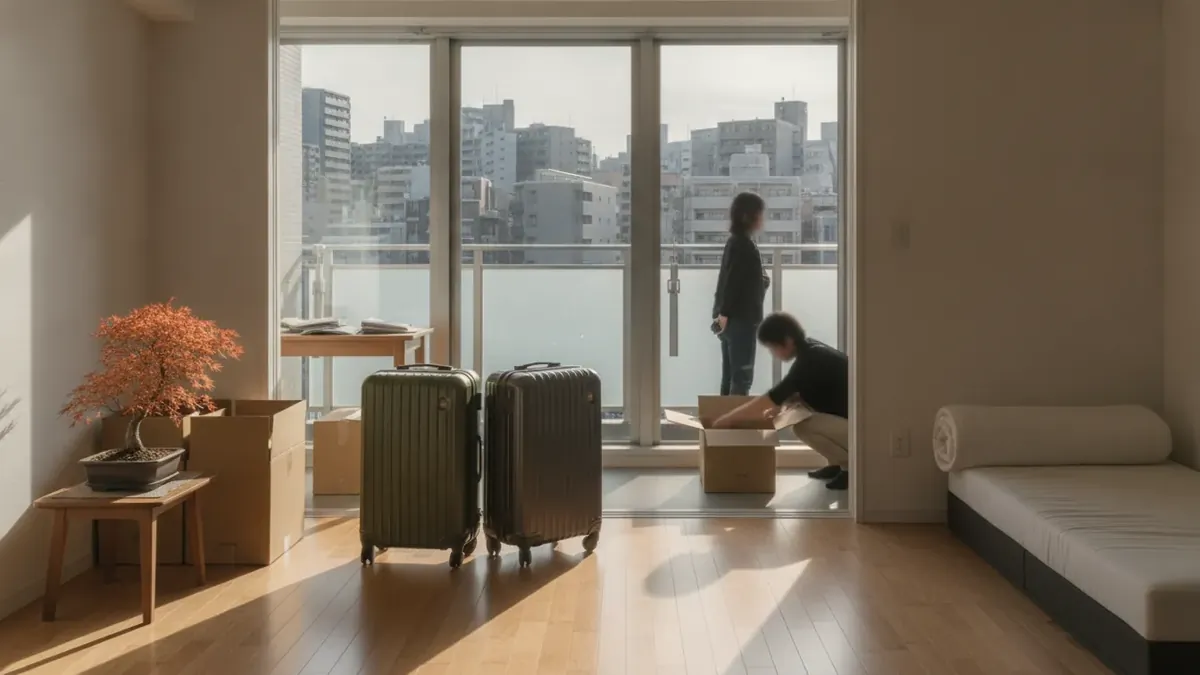
If you are preparing a move to Japan, use the Japan expat guide as the overview, then line up your visa, housing, healthcare, and transport plans before arrival.
Costs below are indicative for 2026 — use them to build a cash-flow plan, then confirm immigration, municipal, and housing fees for your status.
At a glance
- Best for: expats who treat the first 90 days as setup time, not extended tourism
- Hardest part: overlapping immigration steps, housing search, municipal registration, and insurance enrollment
- Good fit for: movers with employer support or a clear status path and documents ready before landing
Before you fly
The smoothest arrivals usually share the same pattern:
- Status of residence confirmed and COE or visa timeline understood
- Housing strategy decided — even if the first place is temporary or company-supported
- Health insurance plan understood for arrival week and first month
- Banking and municipal registration plan mapped for your status
- City choice pressure-tested against budget, space, and commute needs
Trying to solve all of this after landing is possible, but slower and more stressful than most people expect.
Setup cash: what to have ready
| Item | Typical range (¥) | When |
|---|---|---|
| Visa fee | ¥3,000–6,000 | Application, nationality dependent |
| Temporary housing (2–4 weeks) | ¥120,000–300,000 | Weeks 1–3 |
| Long-term move-in on ¥110,000 rent | ¥500,000–700,000 | Weeks 3–6 |
| Furniture and appliances | ¥100,000–300,000 | Weeks 2–6 |
| Arrival/travel insurance | ¥10,000–30,000 | Before public enrollment |
| SIM, IC card, and admin setup | ¥10,000–25,000 | Week 1 |
| Realistic solo buffer | ¥900,000–1,500,000+ | First 60 days |
Corporate housing or a serviced apartment can reduce the upfront lease spike, but normally costs more each month.
Week-by-week checklist (with costs)
Week 1: registration and essentials
| Task | Estimated cost |
|---|---|
| Airport to temporary base | ¥1,000–4,000 |
| SIM/eSIM | ¥2,000–5,000 |
| IC card + initial balance | ¥3,000–5,000 |
| Groceries and simple meals | ¥12,000–25,000 |
| Temporary housing share | ¥30,000–80,000 |
| Week 1 working spend | ~¥48,000–119,000 |
Residents receiving a residence card should register their address at the ward or city office within the required period, then handle health insurance and pension enrollment as their status requires.
Weeks 2–3: banking, phone, and flat hunting
| Task | Estimated cost |
|---|---|
| Temporary accommodation | ¥60,000–150,000 |
| Viewings and transport | ¥3,000–10,000 |
| Private clinic before insurance, if needed | ¥8,000–20,000 |
| Coworking day pass | ¥1,500–3,500/day |
| Incremental spend | ~¥75,000–200,000 |
Check guarantor requirements, key money, building insulation, appliance inclusion, bicycle parking, and the exact station-to-door walk.
Weeks 3–6: lease and move-in
| Task | Estimated cost |
|---|---|
| First month rent | ¥80,000–140,000 |
| Deposit + key money | ¥80,000–280,000 |
| Agency + guarantor fees | ¥80,000–220,000 |
| Lock, cleaning, and insurance fees | ¥40,000–100,000 |
| Furniture and appliances | ¥100,000–300,000 |
| Move-in spike | ¥380,000–1,040,000 |
Do not compare apartments on rent alone. A no-key-money unit can be cheaper to enter even if monthly rent is slightly higher.
Months 2–3: routine test
- Does the commute still work during peak hour?
- Do summer AC or winter heating costs fit the budget?
- Is storage adequate once suitcases and daily items arrive?
- Are insurance, pension, and residence renewals recorded?
If the apartment or line is wrong, adjust before renewal charges and inertia make the choice harder to reverse.
First two weeks: priorities
Most expats should focus on a short list:
- Secure workable housing or a clear temporary base near the area you are targeting
- Receive your residence card on arrival if issued at the airport, and keep every immigration document safe
- Complete municipal registration (jumin tōroku) at your ward or city office within the required window
- Enroll in health insurance through your employer or municipal NHI process
- Open or activate banking that supports your income pattern
- Set up phone/data for appointments, banking, and transit apps
- Learn your neighborhood routine: convenience store, pharmacy, station exits, clinic options
The order matters. Many steps depend on earlier ones, especially address proof and legal status.
First 30–90 days: making the move real
This is when the move stops feeling like a trip and starts feeling like a life.
- Convert temporary housing into a longer lease if the city still fits
- Finish any remaining immigration or employer onboarding tasks and keep copies of every submission
- Learn garbage rules, building norms, and your station-area routine
- Set up recurring bills and understand rent, utilities, and insurance timing
- If working, stabilize workspace, internet backup, and time zone rhythm
- Test whether your apartment's heating, storage, and noise levels work across seasons
If something feels wrong about the city or apartment, this is the window to adjust before inertia sets in.
Banking, bills, and daily admin
Japan's setup pace can feel formal and slow to newcomers. Banks, landlords, and utilities often expect residence registration, a local phone number, and patience with Japanese-language paperwork.
Short-term serviced housing or corporate relocation support can buy time while you learn the city. A standard local lease should wait until you have tested commute, building quality, guarantor requirements, and neighborhood fit in person.
Language and local support
English works in some expat-facing services in Tokyo, but ward-office registration, clinic booking, lease communication, and utility setup are easier with Japanese or employer support.
Family and school moves
Families should research schooling, commute patterns, and ward services before choosing a district. A flat that looks convenient on a map may still create a difficult school or childcare routine once daily timing is real.
Common mistakes to avoid
- Choosing a city from pop-culture memory instead of year-round livability
- Signing a long lease before testing space, heating, and commute reality
- Assuming visa approval removes the need for municipal registration and insurance steps
- Underestimating how much deposits, key money, agency fees, and setup costs add to the first month
- Treating arrival insurance as a substitute for understanding NHI or employer enrollment later
- Ignoring garbage, building, and neighborhood rules that shape daily comfort
How settling connects to the rest of the move
Moving to Japan works best as a chain: legal status → city → housing → healthcare → routine. Weakness in any link makes the others harder.
Use the country and city guides to compare Tokyo, Osaka, and Kyoto before you declare the move finished.
Final thoughts
Japan rewards movers who arrive with paperwork discipline and realistic expectations about formal systems. The first month is rarely glamorous, but a good setup month makes the next year much easier.
FAQ
What should I do in the first week?
Focus on residence documents, temporary housing security, municipal registration timing, phone/data, and learning whether your chosen area actually fits daily life.
Can I move without speaking Japanese?
Yes in parts of Tokyo with employer support, but admin, housing, and healthcare are easier with help or basic Japanese.
Should I rent before I arrive?
Short-term or corporate housing often comes first. Standard local leases are safer after viewing or with trusted on-the-ground help.
How long does setup take?
Many expats need several weeks for housing and registration tasks, and a few months before the move feels fully routine.