

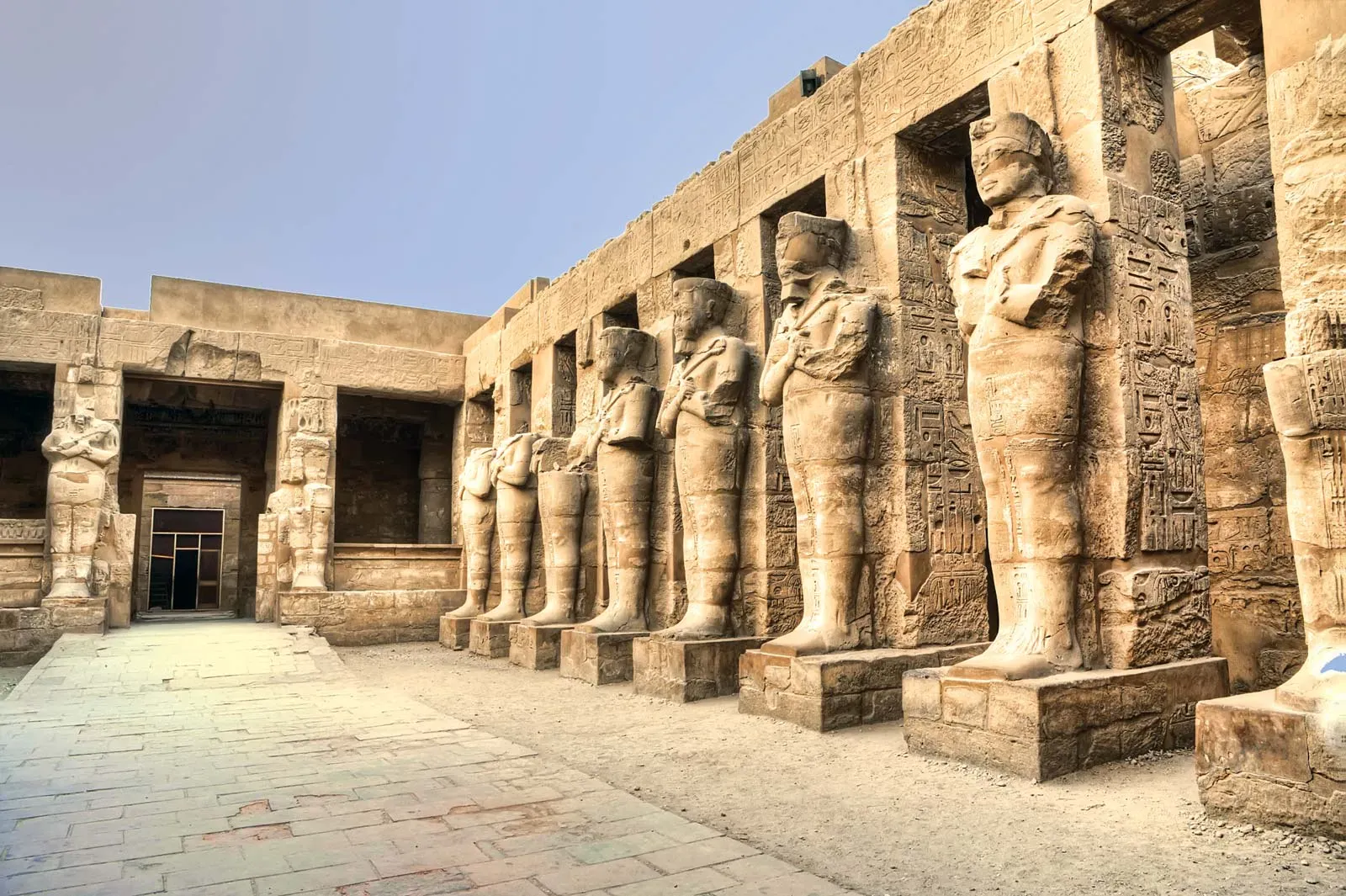
Karnak is the largest religious complex of the ancient world and the single most impressive site in Luxor. For expats in Egypt, it's the one temple that tends to leave the strongest impression — vast, layered, and built over nearly two thousand years.
What you're looking at
Karnak isn't one temple but a sprawling precinct dedicated chiefly to the god Amun, expanded by pharaoh after pharaoh. The showpiece is the Great Hypostyle Hall: 134 massive columns, the tallest around 21 metres, packed into a forest of stone. Beyond it are pylons, obelisks, a sacred lake, and chapels. It was once linked to Luxor Temple by the Avenue of Sphinxes.
Visiting as a resident
Karnak is on the northern edge of Luxor, a short taxi or ride-hail from the centre. It's big — allow a couple of hours, more with a guide, who genuinely helps make sense of the layout. Go early or late to dodge the heat and the coaches; there's also an evening sound-and-light show.
Good to know
- Best months are the cooler November to February.
- A guide adds a lot, given the scale and history.
- Mornings are coolest and quietest.
- Combine with Luxor Temple and the west bank over a two-day stay.
Related
- Living in Egypt — the full expat guide
- Getting around in Egypt — flights, trains, and getting to Luxor
- Luxor Temple — the central temple it was once linked to
- Valley of the Kings — the royal tombs across the river